

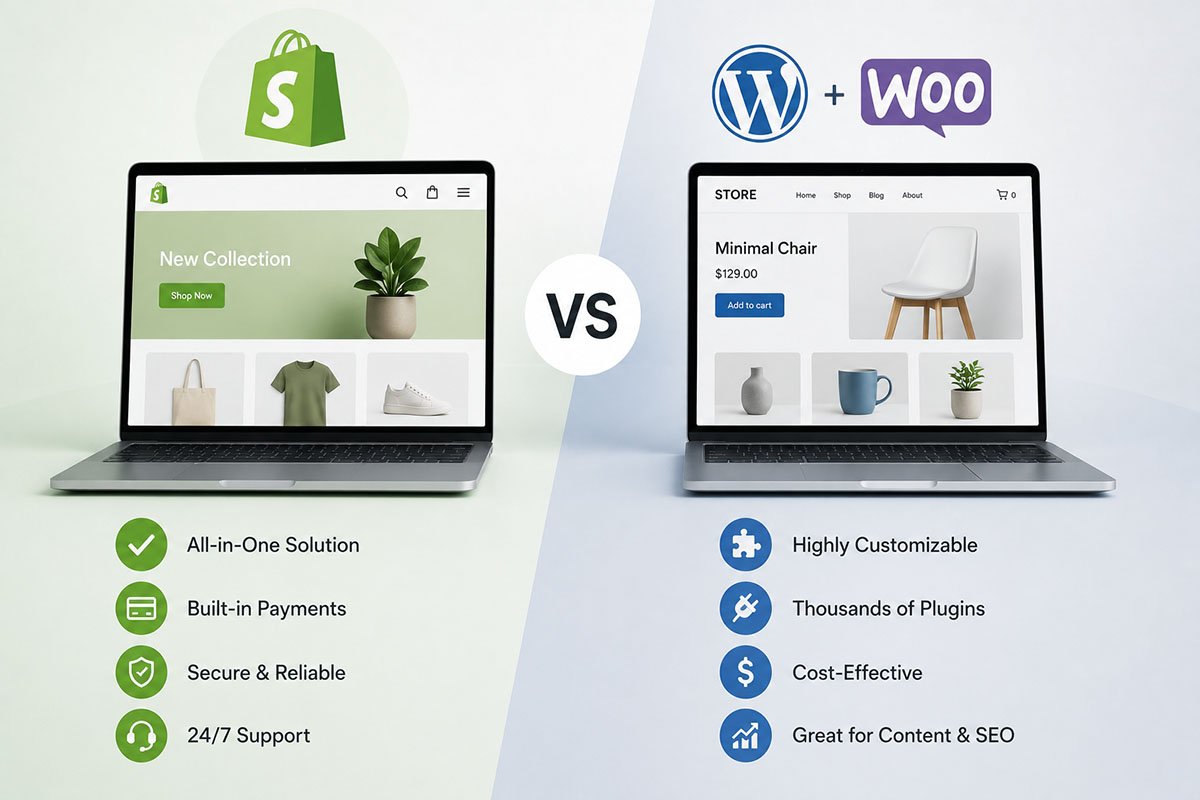
Best E-Commerce Platform for 2024: Shopify vs WordPress
In a fast-paced online world, finding the perfect e-commerce platform for 2024 is a hot topic for everyone, from beginners in the business world to seasoned entrepreneurs. The competition often comes down to two giants in the field: Shopify and WordPress. These platforms, each with their own set of features and functionalities, cater to different business needs and preferences. So, let’s compare Shopify and WordPress to understand which e-commerce platform may be the better choice for 2024.
Shopify vs WordPress: Ease of Use and User-Friendliness
In the busy world of e-commerce, beginners are often looking for the most straightforward platform to launch their online business. Two of the front runners in this space are Shopify and WordPress, each offering distinct features for different types of users. Let’s look at both platforms to determine which one offers a more straightforward setup process for beginners.
Which Platform Offers a More Straightforward Setup Process for Beginners?
Shopify: A user-friendly experience
Shopify has built its reputation as one of the most beginner-friendly e-commerce platforms available today. Its appeal largely comes from its straightforward setup process, which is designed to help beginners launch an online store without a steep learning curve. When setting up a store on Shopify, users are guided through the process step by step, from selecting a theme to adding products and setting up payment gateways.
Shopify also offers a range of pre-designed templates, making it easier to create a visually appealing online store. The platform handles technical aspects such as hosting and security, allowing entrepreneurs to focus more on building and growing their businesses. This makes Shopify an excellent choice for newcomers in the e-commerce space.
WordPress: A flexible yet more complex choice
WordPress offers a highly customizable platform that is incredibly flexible but can be more complex for beginners. Originally designed as a blogging platform, WordPress has evolved into a powerful website-building tool that can support e-commerce through plugins like WooCommerce. However, the setup process usually involves more steps. Users need to secure a domain name, arrange hosting, install WordPress, set up WooCommerce, and manage the technical side of their website.
One of the standout features of WordPress is its vast plugin ecosystem, which allows extensive customization of an online store. However, this flexibility can feel overwhelming for newcomers. Setting up a WordPress e-commerce store may involve adjusting settings, choosing plugins carefully, and sometimes working with code snippets. While this offers immense flexibility, it may be more challenging for beginners.
Shopify vs WordPress: Customization and Design Flexibility
Having a platform that allows customization and offers a strong selection of themes and templates can be a game-changer for any online business. Shopify and WordPress both have strengths and weaknesses in this area. Let’s look at their customization capacity and the range of themes and templates they offer.
How Do Shopify and WordPress Compare in Customization?
Shopify: Streamlined yet sufficient
Shopify offers streamlined customization options that are easy for business owners to use. Its theme editor and drag-and-drop sections make it simple to adjust the look of a store without diving deep into code. Users can also extend their store’s functionality with apps and integrations from the Shopify App Store.
However, Shopify’s customization capacity can feel more limited when compared to WordPress, especially for users who have coding knowledge and want to create a highly customized online store.
WordPress: Boundless customization possibilities
WordPress is one of the strongest platforms when it comes to customization. Because it is open-source, users have far more control over the structure, design, and functionality of their website. Users with coding knowledge can customize the backend, build unique layouts, and create a more personalized web experience.
WordPress also offers a large number of plugins, allowing users to add almost any feature they need. This makes it a strong choice for businesses that want a highly customized online store that stands out in a crowded marketplace.
What Range of Themes and Templates Are Available on Both Platforms?
Shopify: Quality over quantity
When it comes to themes and templates, Shopify takes a quality-over-quantity approach. It offers a curated selection of free and paid themes that are responsive, visually appealing, and optimized for different devices. These themes are designed for different industries, helping business owners find a template that matches their brand without being overwhelmed by too many options.
WordPress: A vast repository of themes
WordPress offers a huge repository of themes for almost every niche imaginable. Its large developer community constantly creates and updates themes, giving users access to a wide selection of templates. From minimalist designs to feature-rich layouts, WordPress gives users many options to create a website that reflects their brand identity.
Shopify vs WordPress: SEO and Digital Marketing Capabilities
The online market demands strong SEO tools and smart digital marketing strategies. Shopify and WordPress both offer useful marketing capabilities, but they approach SEO and digital marketing in different ways.
Click here to discover why SEO is important to your business and how much it costs.
Which Platform Offers Better SEO Tools and Functionalities?
Shopify: User-friendly SEO and marketing features
Inbuilt SEO features
Shopify includes user-friendly SEO features that are suitable even for users with little SEO knowledge. It allows users to edit meta descriptions, alt text, page titles, and SEO-friendly URLs. Shopify also automatically generates sitemap files, making it easier for search engines to crawl and index the website.
Integration with popular advertising platforms
Shopify integrates with popular advertising platforms such as Facebook and Google, allowing business owners to create and manage campaigns more easily. Its ability to support retargeting and Google Shopping campaigns can be useful for store owners looking to improve their digital marketing strategy.
Analytical insights
Shopify offers analytics and reporting tools that provide an overview of store performance. This data can help business owners refine marketing strategies and improve advertising effectiveness.
WordPress: Extensive SEO customization and content marketing
SEO plugins for detailed customization
WordPress stands out for its SEO customization capabilities. Plugins like Yoast SEO and All in One SEO allow users to optimize meta tags, permalinks, sitemaps, and other SEO elements in more detail. These plugins also provide content analysis, helping users improve pages and posts for search engine visibility.
Content marketing excellence
WordPress was originally built as a content management system, so it excels in content marketing. Its blogging capabilities make it easier to publish SEO-focused content, build organic traffic, and increase brand visibility over time.
Flexibility to integrate marketing tools
WordPress can integrate with a wide range of marketing tools and plugins. From email marketing to social media integrations, WordPress allows businesses to build a flexible and comprehensive digital marketing setup.
Shopify vs WordPress: E-commerce Functionalities and Features
The choice of platform can significantly influence the success of an online business. Shopify and WordPress offer different sets of features that suit different business needs. Let’s look at the standout e-commerce features of both platforms.
What Are the Standout E-commerce Features on Shopify and WordPress?
Shopify: A platform built for e-commerce entrepreneurs
Tailored e-commerce tools
Shopify is a dedicated e-commerce platform with tools specifically designed for online selling. Its ecosystem supports businesses of different sizes, from small startups to large enterprises. Key features include multi-channel selling, secure shopping carts, automated tax calculations, and integrations with platforms like Facebook and Instagram.
Built-in payment gateway
One of Shopify’s standout features is Shopify Payments, its built-in payment gateway. This allows smooth and secure transactions directly within the platform, reducing reliance on third-party tools and creating a more seamless checkout experience for customers.
24/7 customer support
Shopify offers round-the-clock customer support through different channels such as live chat, email, and phone. This can be especially useful for business owners who want quick help when technical or store-related issues appear.
WordPress: A versatile and scalable solution
WooCommerce: A powerful e-commerce extension
WordPress becomes a full e-commerce platform through WooCommerce, a powerful plugin that integrates directly with WordPress websites. WooCommerce inherits the flexibility of WordPress, offering extensive customization options, many themes, and the ability to add extra functionality through plugins.
SEO advantage
WordPress has a strong advantage when it comes to SEO flexibility. The platform allows detailed control over SEO elements such as meta descriptions, URLs, alt tags, and site structure. This can help improve search visibility and drive more organic traffic to an online store.
Content marketing power
At its core, WordPress is a content management system. It offers strong tools for creating, managing, and publishing content. This makes it easier for business owners to combine content marketing with e-commerce, building a stronger online presence and encouraging higher engagement.
Shopify vs WordPress: Security and Reliability
In the digital landscape, the security of an online store is essential. Both Shopify and WordPress can support secure e-commerce websites, but the responsibility is handled differently on each platform.
How Do Shopify and WordPress Ensure Online Store Security?
Shopify
Strong infrastructure
Shopify operates as a hosted platform, which means it handles much of the technical security for store owners. The platform is PCI DSS compliant, which means it follows standards for securely managing customers’ payment data. This gives customers more confidence when making purchases online.
Regular security updates
Shopify manages security updates centrally. Store owners do not need to manually update the core platform, which reduces the risk of vulnerabilities caused by outdated software.
WordPress
Flexible plugin ecosystem
WordPress is open-source, which gives users more customization freedom, but also more responsibility. Security depends heavily on the quality of hosting, themes, plugins, and maintenance practices. Security plugins like Wordfence and Sucuri can help strengthen a WordPress site, but store owners must choose reliable, well-maintained tools.
Regular manual updates
WordPress releases regular updates to address known vulnerabilities, but site owners need to keep WordPress, themes, and plugins updated. Regular maintenance is important to keep the website secure.
Shopify vs WordPress: Pricing and Value for Money
When launching an e-commerce platform, it is important to consider the financial implications of your chosen platform. Shopify and WordPress have different pricing structures that reflect their features and services.
Which Platform Offers Better Value for Money?
Shopify: An all-in-one e-commerce solution
Shopify uses a straightforward pricing strategy with tiered subscription plans for businesses of different sizes.
Shopify’s pricing is transparent and includes key features such as an online store, unlimited products, hosting, SSL certificate, and customer support. Higher-tier plans provide additional features such as advanced reports and lower transaction fees.
Because Shopify includes hosting, security, and core e-commerce tools in one package, it can save store owners time and simplify store management. The platform also offers both free and paid themes, making it a complete solution for many e-commerce businesses.
See the full Shopify pricing plan here.
WordPress: A flexible yet potentially cost-intensive platform
WordPress itself is free, but turning it into a full e-commerce platform usually requires additional costs. These can include hosting, a domain name, premium themes, paid plugins, security tools, and WooCommerce extensions.
While WordPress can be cost-effective at the beginning, costs can increase depending on the level of functionality and customization required. Unlike Shopify, WordPress requires users to manage hosting and many technical elements separately.
Final Thoughts
In 2024, the choice between Shopify and WordPress depends on several factors, including your technical expertise, the complexity of your e-commerce needs, and your budget.
If you are a beginner or a small to medium-sized business looking for a ready-to-use and hassle-free solution, Shopify may be the better choice. It removes much of the complexity involved in setting up and managing an online store.
On the other hand, if you are more experienced, need deeper customization, or want more control over your website structure and SEO, WordPress may be the better option.
Both Shopify and WordPress are capable of supporting successful e-commerce businesses. The best choice depends on your business goals, available resources, and the level of control you want over your online store.