( Loading, please wait.. )

10123456789001234567890%

©2025

[ Table of contents ]

Font Trends 2026: The 10 Fonts We Use

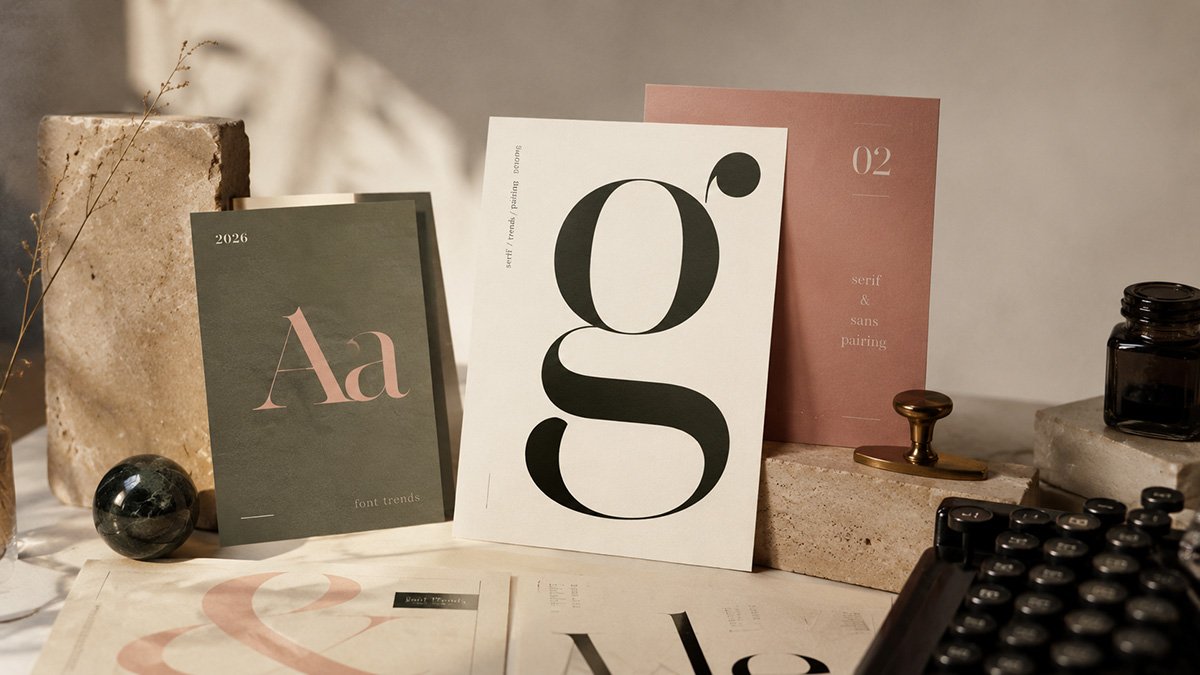
Typography in 2026 is moving away from “neutral by default.” The strongest brand and web work is still clear and readable, but it is also more specific and intentional. The goal is not to chase novelty. The goal is a type system that feels designed on purpose.

Font Trends 2026: The 10 Fonts We Use

Typography in 2026 is moving away from “neutral by default.” The strongest brand and web work is still clear and readable, but it is also more specific and intentional. The goal is not to chase novelty. The goal is a type system that feels designed on purpose.

Best 15 Shopify Themes in 2026
(Free and Paid — Tested and Ranked)

Choosing a Shopify theme is one of the most consequential early decisions you'll make for your store. The wrong theme doesn't just look off — it loads slowly, limits what you can build, and costs you developer time every time you hit its ceiling.

The right theme gives you a fast, flexible foundation that grows with your business — one where the design decisions are already made intelligently, so you can focus on your products, your content, and your customers.

We've reviewed and worked with Shopify themes extensively across client projects. This guide covers the 15 best options in 2026 — five free, five from the official Shopify Theme Store, and five from third-party developers — with honest assessments of who each one is actually for.

How we chose these themes

Every theme on this list was evaluated against five criteria:

Performance score — Lighthouse score on mobile (our minimum threshold is 80+). A theme that looks great but loads slowly will hurt your rankings and cost you conversions.

Shopify 2.0 compatibility — all recommended themes support Sections Everywhere, Online Store 2.0, and Shopify's latest Flex Sections API where applicable.

Customisation flexibility — how much can you change without writing code? And how clean is the code when you do need a developer?

Conversion features — slide-out cart, sticky add-to-cart, product filtering, upsell sections, trust badges. These should be built in, not bolted on via apps.

Ongoing support and updates — themes from developers who actively maintain and update their work. Abandoned themes are a support and security risk.

One important rule: every theme recommended here is available through the official Shopify Theme Store unless explicitly noted. Themes from third-party marketplaces vary wildly in code quality and ongoing support — we'll cover the exceptions carefully.

5 Best Free Shopify Themes

Shopify's free theme library has improved dramatically since 2023. The platform now offers 12 free themes — all built by Shopify, all Online Store 2.0 compatible, and all regularly updated. The best ones are genuinely excellent starting points, not just stripped-down templates to upgrade from.

01. Horizon — Best free Shopify theme overall

Horizon is Shopify's newest flagship free theme, launched in the 2025 Summer Edition. It replaces Dawn as the default Shopify theme and represents a significant upgrade in both flexibility and intelligence.

The headline feature is its block-based editor with support for up to 8 levels of layout nesting — meaning you can create genuinely custom page structures using drag-and-drop without touching code. It also includes AI-powered content generation tools that help produce banners, promo tiles, and landing pages faster.

Horizon ships with 10 design presets covering skincare, home, lifestyle, and more — each well-considered enough to use as a genuine starting point rather than placeholder styling. Built-in conversion tools include slide-out cart, pre-order support, back-in-stock alerts, promo banners, and cross-sell sections.

Best for: brands that want full design flexibility without paying for a premium theme. Particularly strong for DTC brands in beauty, lifestyle, and home.

Price: Free
Lighthouse score (mobile): 88+
Sections Everywhere: Yes
AI content tools: Yes

02. Dawn — Best free theme for performance

Dawn has been the benchmark for Shopify theme performance since its launch, and in 2026 it still scores 95+ on Lighthouse — making it the fastest free theme available. Built from scratch for Online Store 2.0, it uses minimal JavaScript, semantic HTML, and efficient CSS.

Where Horizon wins on flexibility and features, Dawn wins on pure performance. If speed is your primary concern — if you're running high traffic, running ads at scale, or operating in a market where mobile connections are slower — Dawn's performance lead is meaningful.

Its minimalist design keeps products centre-stage. The trade-off is limited built-in features — advanced popups, filtering, and list-building all need apps or development. For a developer building a custom Shopify experience, Dawn is the cleanest possible canvas.

Best for: performance-critical stores, developer-built custom themes, stores with small catalogs that want products to speak for themselves.

Price: Free
Lighthouse score (mobile): 95+
Sections Everywhere: Yes
Custom CSS: Extensive

03. Sense — Best free theme for health, beauty, and wellness

Sense is designed specifically for products that require detailed information — ingredients, usage instructions, certifications, sustainability claims. It displays this content beautifully and loads fast, making it a natural fit for skincare, supplements, wellness, and food brands.

The layout system handles ingredient lists and feature callouts elegantly — things that other themes force into awkward text blocks or require custom development to display properly. Sense manages them natively.

Best for: beauty, skincare, wellness, and health brands. Particularly strong for products where trust and transparency are selling points.

Price: Free
Lighthouse score (mobile): 88+
Sections Everywhere: Yes

04. Crave — Best free theme for fashion and lifestyle

Crave is one of Shopify's newer free themes, designed for bold, trend-forward brands. It features dramatic typography, full-bleed imagery, and a mobile-first navigation pattern that works exceptionally well for fashion, streetwear, and lifestyle brands that need a strong visual presence from the first second.

The design is more opinionated than Dawn or Horizon — if your brand leans editorial, Crave gives you that out of the box without customisation work.

Best for: fashion, streetwear, beauty, and lifestyle brands with strong visual assets and editorial photography.

Price: Free
Lighthouse score (mobile): 88+
Sections Everywhere: Yes

05. Refresh — Best free theme for food, beverage, and subscription

Refresh is purpose-built for food and beverage stores, with native support for recipe pages, nutritional information display, subscription product layouts, and meal planning features. The design emphasises freshness and appetite appeal — things that require custom development on most other themes.

For any food or beverage brand running a subscription model, Refresh is the most capable free starting point available without touching code.

Best for: food and beverage brands, subscription boxes, meal kit services, and health food stores.

Price: Free
Lighthouse score (mobile): 88+
Sections Everywhere: Yes
Subscription support: Native

5 Best Paid Shopify Themes

Paid themes from the official Shopify Theme Store typically cost between AED 650 and AED 1,500 (USD $180–$400). That's a one-time purchase — no annual fees, no subscriptions. For most stores, a well-chosen paid theme saves significantly more in developer costs than it costs to buy.

These five are consistently the best-performing paid options in 2026.

06. Prestige — Best for luxury and premium brands

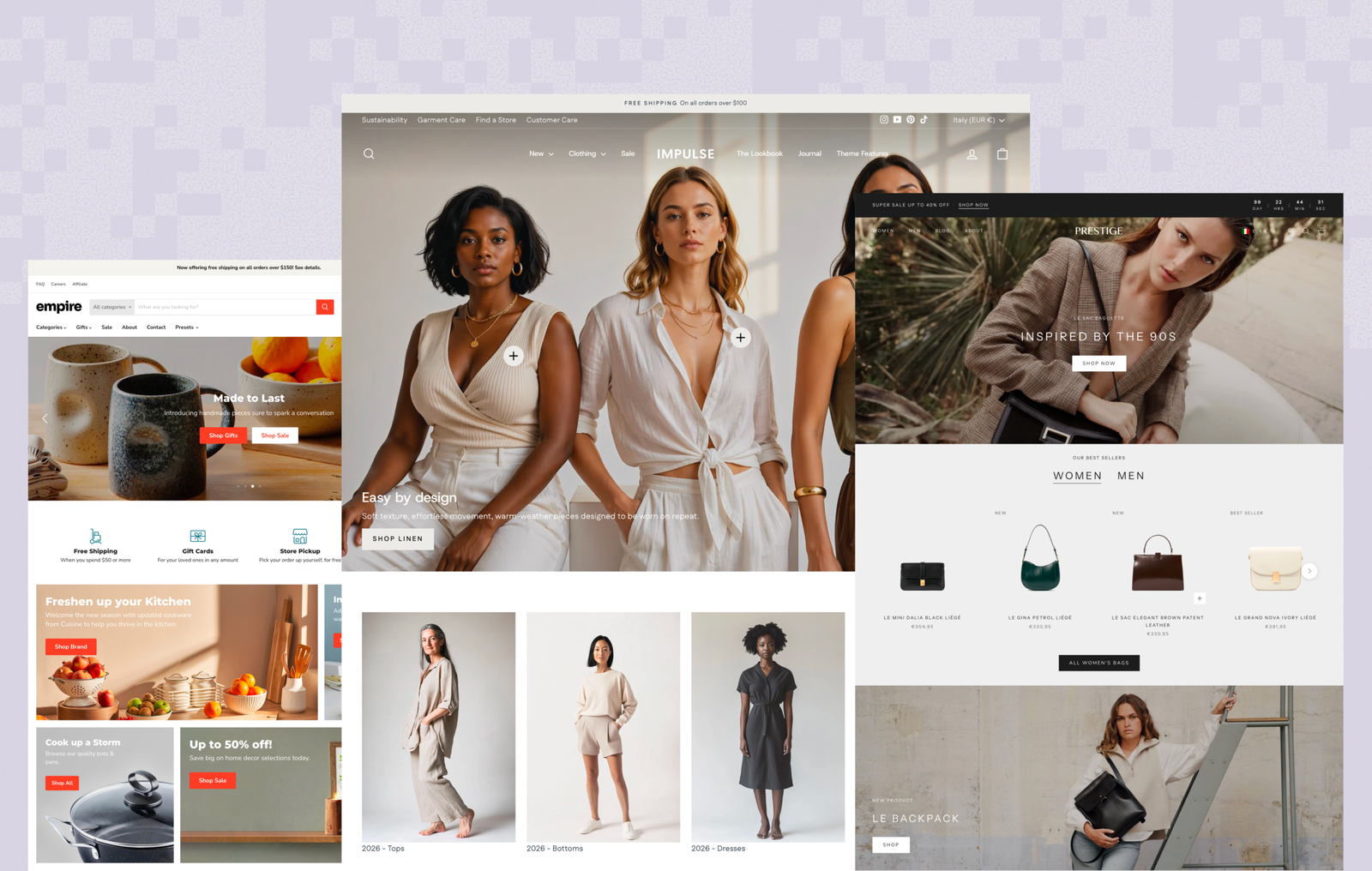
Prestige by Maestrooo is the definitive Shopify theme for luxury, high-end, and premium brands. It features editorial-style product pages, lookbook layouts, image hotspots, and a sophisticated mega menu — the features that make a Shopify store feel genuinely premium rather than templated.

The design language is restrained and confident — exactly what a luxury brand needs from a theme. Maestrooo are one of the most respected Shopify theme studios, and their support and update track record reflects that.

Best for: luxury goods, premium fashion, jewellery, high-end homeware, and any brand where aesthetic positioning is the primary purchase driver.

Price: $400
Lighthouse score (mobile): 85+
Lookbook support: Yes
Mega menu: Yes

07. Impulse — Best for large catalogs and high-conversion

Impulse is one of the most feature-rich themes on the Shopify Theme Store — built specifically for stores with large product catalogs that need advanced filtering, cross-selling, and merchandising tools built in rather than added via apps. Its conversion focus is genuine: collection-based related products, recently viewed products, promotional banners, and advanced product filtering all come standard. For stores managing hundreds of SKUs and running regular promotions, Impulse handles complexity that simpler themes can't manage cleanly.

Best for: large catalogs, fashion multi-brand stores, sporting goods, and stores running frequent promotions.

Price: $400
Lighthouse score (mobile): 85+
Advanced filtering: Yes
Cross-sell sections: Yes

08. Impact — Best for flexibility and conversion focus

Impact, from the same developers as Prestige (Maestrooo), takes a different approach — maximum flexibility over editorial restraint. With over 35 configurable sections, it's one of the most customisable themes on the store without requiring developer involvement.

Strong conversion tools are built in throughout: sticky add-to-cart, upsell sections, trust badge placements, and promotional countdown timers. It works well across fashion, food, cosmetics, and technology — its flexibility makes it genuinely industry-agnostic.

Best for: brands that need significant design control without a developer, and stores that want strong conversion tools alongside that flexibility.

Price: $400
Lighthouse score (mobile): 85+
Sections: 35+
Conversion tools: Extensive

09. Empire — Best for marketplace-style stores

Empire is the closest thing Shopify has to an Amazon-style marketplace theme — built for very large catalogs with complex navigation requirements. Advanced search, filtering, and sorting capabilities are its core strength.

For retailers managing extensive inventories — electronics, parts and accessories, multi-category retail — Empire handles navigation complexity that most other themes make difficult. It's not a design-forward theme; it's an infrastructure-forward one.

Best for: large-catalog retailers, multi-category stores, electronics, auto parts, and any store where product discovery is more important than editorial presentation.

Price: $340
Lighthouse score (mobile): 83+
Advanced search: Yes
Multi-level navigation: Yes

10. Craft — Best for artisan, handmade, and small catalog brands

Craft is designed for brands where the story behind the product is as important as the product itself — artisan goods, handmade products, specialty food and beverage, and small-catalog brands with a strong brand narrative.

Its layout system prioritises storytelling: founder stories, production process sections, and product origin content all have dedicated, well-designed templates. For a brand selling 20 products with deep provenance stories, Craft is more appropriate than any conversion-optimised theme built for scale.

Best for: artisan brands, handmade goods, specialty food, small-batch production, and any brand where why matters as much as what.

Price: Free (also available paid with extended features)
Lighthouse score (mobile): 88+
Storytelling sections: Native

5 Best Third-Party Shopify Themes

A note of caution before this section: most problems we see with Shopify theme performance, compatibility, and maintainability come from third-party themes bought outside the official Shopify Theme Store. Messy code, no updates, broken app compatibility — these are disproportionately third-party theme problems.

The five below are the exceptions — themes with strong development studios behind them, active support, and real track records. If you go third-party, stick to these developers and buy from their official sites, not from marketplaces.

11. Booster — Best for speed-critical stores

Booster consistently produces some of the best mobile performance scores of any Shopify theme — free or paid — and includes over 75 niche-specific presets. Its conversion-oriented feature set eliminates the need for many common Shopify apps, which further improves load speed by reducing third-party script weight.

If Core Web Vitals and page speed are your primary concern, Booster is worth serious consideration.

Best for: stores where speed is a primary concern, high-traffic campaigns, and brands replacing app functionality with theme-native features.

Price: ~$248/year
Where to buy: From the official Booster website only

12. Prestige (Extended) / Maestrooo themes — Best studio for premium builds

Maestrooo consistently produce the highest-quality Shopify themes available — both in terms of design craft and code quality. Their extended theme versions and support packages are worth the additional investment for brands building a genuinely premium digital presence.

If you're investing in a custom Shopify build and want a theme foundation that a developer can work with efficiently, Maestrooo themes are the cleanest option on the market.

Best for: premium brands working with a development agency, brands that need excellent code quality for custom development work.

Price: $320–$380 from Shopify Theme Store
Developer: Maestrooo

13. Kalles — Best for multi-niche flexibility

Kalles by The4 Studio is one of the best-rated third-party Shopify themes available, with hundreds of demos covering virtually every store type. For brands that want a highly visual, modern design with extensive preset options, Kalles offers genuine flexibility.

Best for: fashion, lifestyle, and beauty stores that want a modern, multi-layout theme with a wide range of preset starting points.

Price: ~$89 one-time (ThemeForest)
Developer: The4 Studio
Note: Buy from The4's official site when possible for better support.

14. Gecko — Best for feature-dense, complex stores

Gecko is one of the most feature-rich third-party themes available — hurry countdowns, optimised add-to-cart buttons, limited shipping time bars, trust badges, and extensive product display options all built in. For stores that would otherwise install 8–10 apps to achieve the same functionality, Gecko consolidates significant feature weight into the theme itself.

Best for: high-conversion focused stores, brands running regular promotions, and merchants who want to reduce app dependency.

Price: ~$59 one-time (ThemeForest)
Developer: Codless

15. Taiga — Best for visual brands wanting high performance

Taiga is a premium Shopify 2.0 theme built for brands that value both visual freedom and high performance — a combination that's difficult to achieve and that Taiga manages better than most. Available through the official Shopify Theme Store, it combines editorial layouts with performance-minded code.

Best for: brands that need visual impact and speed simultaneously — fashion, beauty, and lifestyle brands with strong photography assets.

Price: Available on Shopify Theme Store
Lighthouse score: 85+

How to choose the right Shopify theme

The most common theme selection mistake is choosing based on how a demo looks. Demo stores are always styled to show a theme at its best — your products, your content, and your brand will look different.

Here are the five questions that actually matter:

Does it support your content structure?

A two-product DTC brand and a 500-SKU retailer need completely different page architectures. Make sure the theme's collection, product, and filtering logic matches how your catalog is actually organised.

How does the mobile checkout feel?

Open the theme demo on your phone. Navigate to a product page and go through the checkout flow. This is where most of your customers will convert — or not.

What does it actually score on PageSpeed?

Open the demo URL in Google PageSpeed Insights. A theme's claimed performance and its real performance are often different. Aim for 80+ on mobile.

Can your team manage it without a developer?

Open the Shopify theme editor and check how the sections work. If you can't make basic content changes without breaking things, you'll be paying for developer time on every campaign.

Is it actively maintained?

Check the theme's changelog on the Shopify Theme Store. How recently was it updated? Are there active support responses? A theme with no updates since 2022 is a liability.

Free vs paid: an honest breakdown

The honest answer is that the gap between free and paid Shopify themes has narrowed significantly in 2026. Horizon is genuinely excellent — better than many themes that cost $300 two years ago.

Start free if:

You're launching your first store and testing product- market fit.
You have a simple catalog (under 50 products).
You're working with a developer who will customise extensively anyway.
You're on a tight budget and plan to reinvest revenue into the theme later.

Invest in a paid theme if:

You need advanced filtering for a large catalog.
You want built-in features that would otherwise require 3–5 additional apps.
Your brand positioning requires a more premium, differentiated design.
You're launching with a serious marketing budget and need conversion tools from day one.

The math that often gets missed: a $350 paid theme that includes built-in upsells, filtering, and a slide-out cart can save AED 1,500–3,000/year in app subscription fees. Run the numbers for your specific situation before defaulting to free.

FAQs

What is the best free Shopify theme in 2026?

Horizon is now the best free Shopify theme — it replaced Dawn as Shopify's default in 2025 and offers significantly more design flexibility and built-in features. Dawn remains the best option for pure performance (Lighthouse 95+). Choose Horizon for flexibility, Dawn for speed.

How much do paid Shopify themes cost?

Paid themes on the official Shopify Theme Store range from around $180 to $400 — a one-time purchase with no annual fees. Third-party themes from marketplaces like ThemeForest typically cost $59–$89 one-time, though quality varies significantly. Booster is an exception at around $248/year as a subscription model.

Do Shopify themes affect SEO?

Yes — significantly. Your theme affects page load speed, mobile performance, heading structure, image rendering, and schema markup output. A slow, poorly structured theme actively damages your search rankings. All themes on this list score well on Core Web Vitals, which Google uses as ranking signals.

Is it worth paying for a Shopify theme?

For most established stores — yes. A $350 paid theme that includes built-in filtering, upsells, and a slide-out cart can save significantly more than its cost in app subscription fees. For a new store testing product-market fit, a free theme like Horizon is an excellent starting point.

Can I switch Shopify themes later?

Yes — but it requires work. Switching themes means restyling your store from scratch within the new theme's editor. Customisations you've made to your old theme won't carry over. It's not a painful process, but it's not seamless either. Choose your theme with a 12–18 month horizon in mind, not just for the launch.

Which Shopify theme is best for e-commerce in the UAE?

For UAE e-commerce brands specifically, themes with strong mobile performance are particularly important — a high proportion of UAE shoppers browse and buy on mobile, often on 4G rather than broadband. Horizon, Dawn, and Impulse all perform well in mobile-first contexts. Ensure your chosen theme also supports RTL (right-to-left) layout if you need Arabic language support — not all themes handle this cleanly.

The right theme is not the one that looks most impressive in a demo — it's the one that loads fast, handles your catalog structure cleanly, and gives your team the control they need without a developer on call for every change.

Start with Horizon if you're on a budget. Invest in Prestige or Impulse if your store has outgrown a free theme's capabilities. And always test performance on PageSpeed Insights before committing — a theme that looks premium but loads slowly is a cost, not an asset.

If you're building a Shopify store for the UAE or GCC market and want a senior team to handle the theme selection, customisation, and development, we're happy to take a look.