How to dropship with Shopify?
Using Shopify for dropshipping is a popular strategy for eCommerce businesses of all sizes. It offers several benefits over traditional retail, including lower start-up costs and fewer risks. However, it also comes with challenges you will need to overcome if you want your dropshipping business to succeed.
For those unfamiliar with dropshipping, it is a retail fulfilment method where a store does not keep the products it sells in stock. Instead, when a store sells a product, it purchases the item from a third party and has it shipped directly to the customer. As a result, the merchant never sees or handles the product.
The merchant places an order with their dropshipper, or dropship supplier, who then ships that item directly to the customer on behalf of the business. Once the customer receives their order and pays for it, the merchant is notified and can pay the supplier. This means there is no need to worry about holding inventory, storing products, or keeping unsold stock at home.
What is Shopify dropshipping?
Shopify dropshipping is an eCommerce business model that allows you to
add and sell products without having them in stock. Instead, your dropshipping suppliers take care of shipping while you focus on marketing, branding, and making sales.
Shopify supports dropshipping through apps and integrations, which means you can set up your store with a suitable theme, connect suppliers, import products, and begin selling through your online store.
In Shopify dropshipping, you connect with suppliers who provide products for you to sell. You add their products to your Shopify store, set your pricing, and promote them to your customers. When someone places an order, the supplier handles the fulfilment process.
Things to consider before dropshipping with Shopify
Shopify is a practical way to get started with dropshipping. You can test the platform, explore different apps, and choose from
cost-effective plans as your store grows. Before you begin, however, there are a few important things to consider.
1. Research your suppliers and products
Before selling anything, it is important to know who you are working with. You need to find out whether the supplier is reliable, whether they have a good reputation, and whether their products are suitable for your audience.
There are many ways to research products. You can use free methods such as Google Trends or look at what is popular on Amazon, Alibaba, or
AliExpress. There are also paid tools such as
Sell The Trend that can help you identify product opportunities.
2. Look for a specific niche
As with any business, it is important to choose a niche. A clear niche helps you find suppliers, choose products, build a stronger brand, and speak more directly to your target audience. Common niches include beauty, tech, sports, homeware, and pet products.
3. Consider the quality of the products
You need to make sure that the quality of your supplier’s goods is high enough for your customers. Good product quality helps build trust, encourages repeat purchases, and reduces complaints.
A popular way to test quality is to ask your supplier for a sample product. Suppliers are often happy to send samples, although you may need to cover the cost of the item and postage. If you do not want to wait for a sample, another useful method is to review customer feedback and product reviews carefully.
4. Look at the prices
It is important to know what your competitors are charging so that you can price your products accordingly. You can research this by searching for your product on Google and comparing prices across competing stores.
Amazon prices will often be lower, but part of the dropshipping model is to run ads directly to your own store and create a stronger brand experience that can support higher prices.
How does Shopify dropshipping work?
Shopify dropshipping is a fulfilment method that allows you to buy products from suppliers and sell them on Shopify without managing inventory or shipping yourself.
It works by using a third-party supplier or dropshipping app as an intermediary between your store and the product provider. This allows you to import product data into your Shopify store, sell the products through your website, and pass the order details to your supplier for fulfilment.
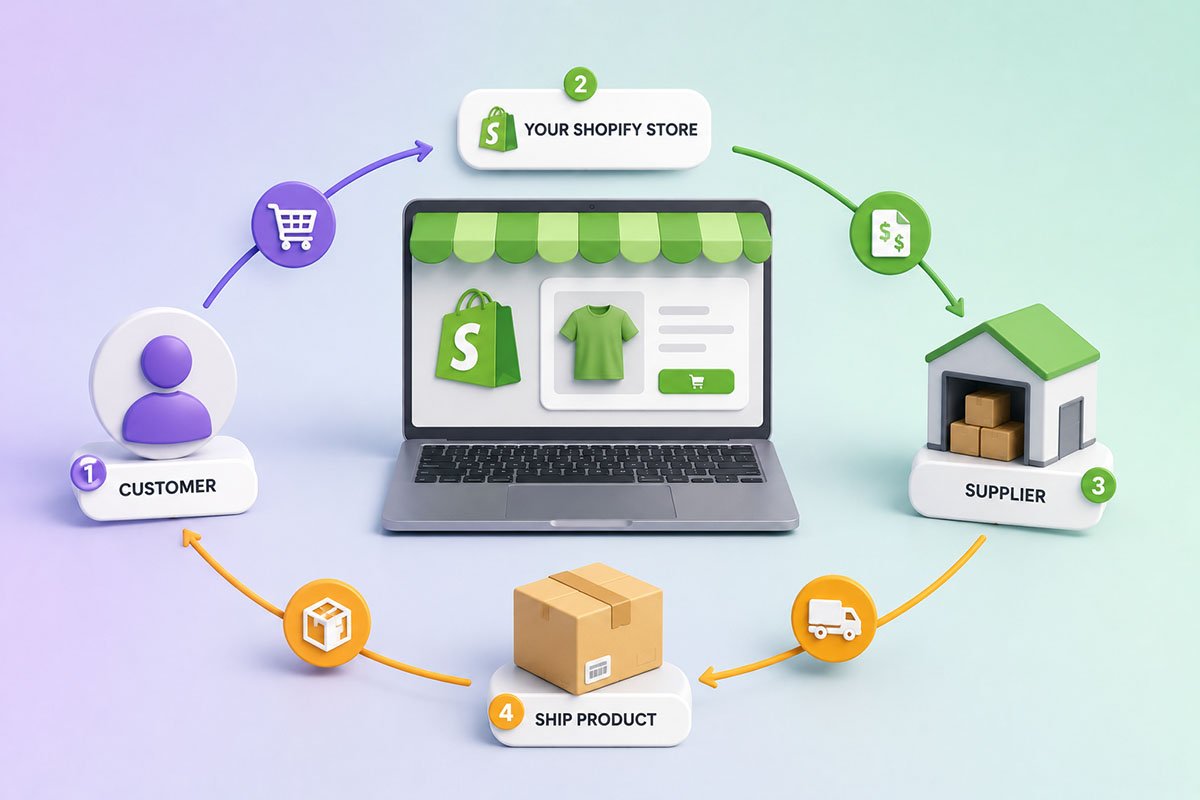
Let’s examine the Shopify dropshipping process.
1. A customer purchases from your Shopify store: A customer places an order and pays for the product on your Shopify dropshipping website.
2. You send the order to your supplier: You give your supplier the order and delivery details. This is why it is important to work with a reliable supplier who can deliver the service you promise.
3. You receive a bill: Once your supplier receives the order, you are charged for the product and any related dropshipping or fulfilment fees.
4. You pay for the product and service: You pay your supplier, usually covering the wholesale cost of the product plus any dropshipping fee.
5. The supplier ships the product: The supplier handles the packaging and shipping, sending the product directly to your customer.
The dropshipping process on Shopify is straightforward. You choose the products you want to sell, add them to your store, and the supplier handles fulfilment. Depending on the app or supplier you use, you can manage this manually or automate the process. You can also choose between
manual fulfilment and automatic fulfilment depending on your setup.
What are the pros of dropshipping?
Dropshipping is an accessible way to start and scale an online business. You do not need to worry about large upfront inventory costs, storage space, or handling every part of the fulfilment process yourself. Some of the main benefits include:
- You do not have to worry about inventory or storage space.
- It is relatively easy to start and requires less upfront investment than traditional retail.
- You can focus on marketing and sales instead of managing stock.
- You can sell a wide range of products without purchasing them first.
- You can test different products and niches more easily.
That said, you still need to pay close attention to supplier quality, customer service, delivery times, product margins, and branding if you want your dropshipping store to succeed long term.
What makes Shopify different from other eCommerce platforms?
Shopify is a hosted
eCommerce platform, which means you do not have to install software on your own computer or manage hosting yourself. It is easy to use, has strong support resources, and offers plenty of themes and apps through the
Shopify App Store.
For dropshipping, Shopify is especially useful because it connects with many supplier and fulfilment apps. These apps can help you import products, sync inventory, manage orders, and automate parts of the fulfilment process.
What tips should you follow when running your Shopify dropshipping business?
Shopify makes it easy to set up a dropshipping business, but creating a profitable store still requires planning, research, and consistent optimisation. Here are some useful tips:
- Determine whether dropshipping is the right fit for you and your business before taking action.
- Choose a clear niche instead of trying to sell everything to everyone.
- Research suppliers carefully before adding their products to your store.
- Order samples where possible to check product quality and delivery times.
- Stay organised using Kanban boards, project management software, or another workflow system.
- Keep an eye on your margins and research what other retailers charge for similar products.
- Use Shopify’s built-in reports to monitor sales, customer behaviour, and product performance.
- Invest in strong branding, product imagery, and store design to help your business stand out.
Helpful apps and websites to get started with dropshipping
The Shopify App Store includes many apps that can help you set up your dropshipping store and automate parts of the sales process. Below are some useful apps and websites to consider.
DSers is one of the most popular dropshipping apps on the Shopify App Store. It can help with product importing, supplier management, and automatic fulfilment, making it a useful all-in-one option for many dropshipping stores.
Ali Orders is a product importing and auto-order fulfilment app designed to integrate with AliExpress. It can be a useful option for merchants who want to start with AliExpress-based dropshipping.
Printful is a popular print-on-demand and dropshipping app focused on apparel, accessories, and custom products. Printful also acts as the supplier, allowing you to automate orders and add your own markup to generate profit.
Fiverr can be useful when setting up a new store, especially if you need a logo, product descriptions, visual assets, or support from freelancers.
ECOM King is a YouTube channel focused on developing and growing Shopify dropshipping stores. It includes advice on store setup, products, advertising, and trends.
Conclusion
Dropshipping can still be a viable eCommerce model when approached properly. If you are looking to start an online store, Shopify is a strong option because it is easy to set up, offers many apps and integrations, and provides useful tools for managing products, orders, and sales.
Our recommendation is to focus on
design, high-quality branding, strong imagery, reliable suppliers, and clear product positioning. These elements can help your store stand out when running Google, TikTok, Facebook, Instagram, or other social advertising campaigns.