

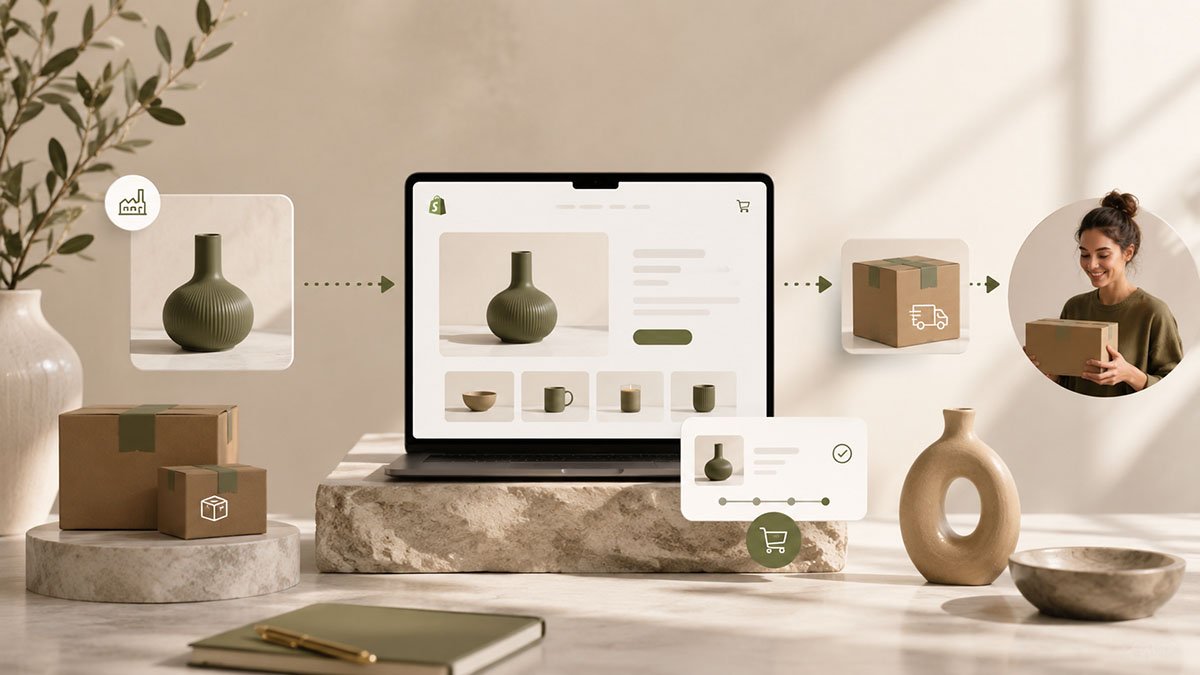
How Does Shopify Dropshipping Work?
We’ve got a lot of questions about how Shopify dropshipping works. First, let’s explain what dropshipping is. Dropshipping is an e-commerce model where a store does not keep the products it sells in stock. Instead, when a store sells a product, it purchases the item from a third-party supplier and has it shipped directly to the customer.
As a result, the seller does not handle the product directly. This model creates a low barrier to entry for starting an online business, as there is no need to invest heavily in inventory. The seller acts as a middleman, focusing on marketing and customer service, while the supplier handles product stocking and shipping logistics.
What is Dropshipping and Its Role in E-commerce?
Dropshipping is an e-commerce approach where a store does not hold inventory. When a customer makes a purchase, the store buys the product from a third-party supplier, who then ships it directly to the customer.
Dropshipping plays a significant role in the broader e-commerce landscape by making online retail more accessible. It allows individuals and small businesses to start and scale online stores without the need for substantial capital, warehousing, or a large inventory. This model contributes to the diversification of the e-commerce market, as it enables a wide range of products to be offered online without the risks associated with traditional inventory management.
Furthermore, dropshipping has encouraged innovation in e-commerce platforms and supply chain logistics, as companies seek to optimize the efficiency and reliability of this model. This includes advancements in integrated software solutions for managing orders, payments, and supplier relationships, making it easier for small retailers to stay competitive in the online market.
By lowering barriers to entry, dropshipping enhances competition, which can lead to better prices and more choices for consumers. It also encourages entrepreneurship, as individuals can start and manage online businesses with relatively minimal overhead costs and operational complexity.
Advantages of Dropshipping
Dropshipping presents several compelling advantages, particularly for beginners or small businesses.
Minimal Initial Capital: One of the most significant benefits is the low startup cost. Unlike traditional retail models, dropshipping does not require a large upfront investment in inventory. Entrepreneurs can start an e-commerce business without needing to buy or store large quantities of products.
Easy to Start: Setting up a dropshipping business is relatively easy, especially with platforms like Shopify. Without the need to manage physical inventory, the operational complexity is significantly reduced.
Low Overhead Costs: Since there is no need for a physical warehouse or large inventory, overhead costs are minimal. Many dropshippers operate from home, saving on rent and utilities.
Flexibility in Location and Schedule: Dropshipping can be managed from anywhere with an internet connection. This flexibility allows small business owners to work from home or while traveling, providing a better balance between work and personal life.
Wide Product Selection: Without the constraints of pre-purchasing inventory, dropshippers have the freedom to offer a broader range of products. This flexibility allows for easy testing of market trends and adaptation to consumer demand.
Reduced Risk: Since products are purchased only after a sale is made, the risk of having unsold inventory is significantly lower.
Ease of Scaling: Scaling a dropshipping business can be more straightforward compared to traditional retail. As sales increase, the business does not necessarily face the same increase in operational workload, since order processing is handled by the supplier.
Learning Opportunity: For beginners, dropshipping serves as an excellent way to learn about e-commerce, online marketing, customer service, and supply chain management without the high stakes of a traditional business.
These advantages make dropshipping an attractive option for those looking to enter the e-commerce space with limited resources or for small businesses aiming to expand their product offerings without significant investment.
The Concept Between Customers and Suppliers
In the dropshipping business model, the retailer serves as a middleman between the customer and the supplier. This role involves several key functions.
Product Curation and Marketing: The retailer selects products from suppliers and markets them to potential customers. This often involves creating an online storefront, listing products, and using various digital marketing strategies to attract customers.
Customer Interaction and Sales: The retailer handles all customer interactions, from answering queries to processing sales. They are the point of contact for customers, even though they do not physically handle the product.
Order Processing: When a customer places an order, the retailer forwards this order to the supplier. The retailer’s role is to ensure the order details are accurate and communicated effectively to the supplier.
Quality Control and Supplier Relations: While the retailer does not handle inventory, they are responsible for choosing suppliers who provide quality products and reliable service. Maintaining a good relationship with trustworthy suppliers is crucial for ensuring customer satisfaction.
Customer Service and After-Sales Support: The retailer is responsible for addressing any customer concerns or issues after purchase, such as handling returns and refunds, even though they do not manage the logistics directly.
In essence, the retailer in a dropshipping model acts as a bridge, connecting customers with suppliers while managing the marketing, sales, and customer service aspects of the business.
How to Set Up a Shopify Dropshipping Store
Here is a step-by-step guide to creating a Shopify account and setting up a dropshipping store:
1. Sign Up for Shopify: Visit the Shopify website and click on the “Start free trial” button. Enter your email address, password, and store name.
2. Set Up Your Shopify Store: Follow the prompts to add essential details about your store. Customize your store’s design by selecting a theme and adjusting its layout.
3. Add Products to Your Store: Choose a dropshipping app like DSers and install it in your Shopify store. Use the app to find products from suppliers and add them to your store.
4. Configure Payment and Shipping: Set up payment gateways like PayPal, Stripe, or Shopify Payments. Configure your shipping rates and policies.
5. Set Up Store Policies: Draft and publish your refund, privacy, and terms of service policies so they align with your business values and practices.
6. Test Your Order System: Place a test order to ensure everything works correctly, from the checkout process to order fulfillment, giving your customers a smooth experience.
7. Launch Your Store: Remove the password protection from your Shopify store to make it live and accessible to customers.
8. Market Your Store: Develop and implement a marketing plan that includes strategies for attracting and engaging customers after launch.
Remember, each step requires attention to detail to ensure a smooth launch and efficient operation of your dropshipping business.
Shopify Dropshipping Apps for Your Store
Setting up a Shopify dropshipping store is quite easy, making it an ideal platform for entrepreneurs and small businesses who would like to start a dropshipping business. Shopify’s user-friendly interface simplifies the process of creating and customizing an online store, even for those with minimal technical expertise.
Shopify also offers seamless integration with numerous dropshipping apps. These Shopify dropshipping apps allow users to easily import products from suppliers directly into their Shopify store with just a few clicks. This integration not only streamlines the product addition process but also automates many aspects of the dropshipping operation, from order fulfillment to inventory management, enhancing the overall efficiency of running an e-commerce business.
Here are some popular Shopify dropshipping apps that can be used:
DSers: A popular dropshipping app that allows efficient management of multiple suppliers and bulk order processing.
Spocket: Spocket is popular for sourcing products from the US and EU, offering faster shipping times. It integrates with AliExpress and Alibaba and is available on a free plan.
Printful: Ideal for print-on-demand products, offering customization options for apparel, accessories, and more.
SaleHoo: Connects users with vetted suppliers and offers a directory for finding products to sell.
Modalyst: Focuses on high-quality products and name brands, offering a wide range of items including eco-friendly products.
AutoDS All-In-One Dropshipping: This Shopify dropshipping app supports product import from AliExpress, Amazon, and Temu.
Zopi – AliExpress Dropshipping: This app allows for easy import of products from platforms like AliExpress and Temu. It is designed specifically for Shopify and offers a free plan.
Why Choose Shopify for Your Dropshipping Business
So, why choose Shopify for your dropshipping business? Shopify stands out as a strong choice for entrepreneurs entering dropshipping. Its ease of use, integration capabilities, customization options, and support system provide a solid foundation for building a successful online store.
User-Friendly Platform: Shopify is known for its intuitive and user-friendly platform. It is designed for entrepreneurs who may not have extensive technical expertise, making it easy to set up and manage a Shopify dropshipping store.
Easy-to-Use Dropshipping Tools: Shopify integrates with various dropshipping channels and apps. These integrations simplify the process of adding products to your store, setting prices, and handling orders.
Customizable Storefronts: With a wide range of customizable templates, Shopify enables you to create a unique and professional-looking storefront that can be tailored to match your brand identity.
Reliable and Secure Hosting: Shopify provides reliable hosting with excellent uptime, helping ensure that your store is available to customers. It also takes care of security essentials, offering secure payment gateways and SSL certificates to protect your and your customers’ data.
Effective Marketing Tools: Shopify offers a suite of marketing tools and integrations, including options for SEO, email marketing, and social media integration. These tools are essential for driving traffic to your store and increasing sales.
Great Customer Service: Shopify’s customer support is available 24/7, providing assistance whenever you encounter challenges or have questions about your Shopify dropshipping store.
Community and Resources: Shopify supports multiple languages and currencies, making it easier to expand your Shopify dropshipping business globally and cater to customers from different regions. Shopify also has a large community of users and experts, along with a wide range of educational resources. This community support can be especially valuable when you are starting out.
In the dynamic and competitive world of e-commerce, dropshipping stands out as a popular and flexible business model. It offers entrepreneurs a low-risk way to sell products online without the need for significant upfront investment in inventory. The success of a dropshipping business, however, is greatly influenced by the choice of e-commerce platform.
This is where Shopify emerges as a leading contender. By choosing Shopify, you are not just selecting an e-commerce platform; you are gaining a system that can support your business journey from setup to growth.